Quick Answer: An effective webinar follow-up strategy uses timely, relevant communication based on what each registrant actually did. It begins with registration confirmation and reminders, then separates people who attended, missed the webinar, clicked the offer, booked a call or became clients.
For coaches and consultants, the objective isn't to send as many emails as possible. It's to continue the conversation, reinforce the value of the webinar and help suitable prospects decide whether they want additional support.
A practical approach is to use a short, structured sequence over approximately seven days, supported by CRM automation that stops or changes messages when someone takes the next step.
My recommendation: Don't send every registrant the same follow-up. Respond to their behaviour and give them a relevant reason to continue the conversation.
What You'll Learn
In this guide, you'll discover:
Why webinar follow-up matters for client acquisition
How to structure confirmation and reminder emails
What to send to webinar attendees
How to follow up with people who registered but didn't attend
How to nurture interested prospects who haven't booked a call
How to use CRM automation and segmentation
A practical seven-day webinar follow-up framework
Common mistakes that reduce engagement and trust
Which follow-up metrics to track
Why Is Webinar Follow-Up So Important?
Webinar follow-up helps interested prospects continue evaluating your expertise and offer after the presentation has ended.
A webinar can create interest, establish credibility and introduce a solution.
But not everyone is ready to take action immediately.
Some viewers need to review the information.
Others want to understand the offer more clearly.
Some may need to discuss the decision with a business partner, manager or spouse.
And others may simply have been interrupted before reaching the end of the presentation.
Without a follow-up process, many of these conversations never continue.
This is particularly relevant for coaches and consultants offering higher-value services, where the buying decision often requires more consideration than a low-cost online purchase.
However, follow-up should never become a substitute for a compelling webinar or a relevant offer.
The purpose of follow-up is to support an informed decision, not pressure someone into making one.
When Should Webinar Follow-Up Begin?
Webinar follow-up should begin immediately after registration, not after the presentation ends.
The registration confirmation is the first opportunity to reinforce the value of the event and ensure the attendee knows what happens next.
A complete webinar communication journey has three stages:
Stage 1: Before the Webinar
The objective is to make attendance easy and reinforce why the presentation is worth watching.
This includes confirmation messages, access information and reminders.
Stage 2: Immediately After the Webinar
The objective is to respond to what the registrant actually did.
Someone who watched the entire presentation may need different information from someone who never attended.
Stage 3: Ongoing Nurturing
The objective is to help interested prospects understand the offer, address relevant questions and take the next step when appropriate.
This stage should end or change when someone books a consultation, becomes a client or unsubscribes.
Stage 1: Build an Effective Webinar Confirmation and Reminder Sequence
1. Send a Registration Confirmation Immediately
Your confirmation email should reassure registrants that their registration was successful and make the webinar access details easy to find.
Include:
The webinar title
The scheduled date and time, including time zone where relevant
A working access link or clear instructions for receiving it
A brief reminder of what the viewer will learn
A calendar link when appropriate
Contact or support information if access problems occur
Avoid overwhelming registrants with unnecessary promotional content.
The main purpose of this email is clarity.
Example subject line: You're Registered: Your Webinar Access Details
2. Send a Reminder Before the Webinar
For a scheduled webinar, I recommend testing reminders at practical intervals, such as one hour and fifteen minutes before the event.
These timings are starting points, not universal performance benchmarks.
The ideal schedule depends on your audience and whether the event is live or evergreen.
Each reminder should include a direct access link.
Avoid requiring registrants to search through earlier messages to find the webinar.
3. Reinforce the Value of Attending
A reminder shouldn't simply say that the webinar starts soon.
Briefly remind people what they will learn.
For example:
"In today's session, you'll discover how to structure your expertise into a webinar that attracts qualified prospects and creates a clear next step towards working with you."
Keep the message short and relevant.
4. Make Time Zones and Access Links Reliable
This is especially important when your audience is international.
If your webinar is scheduled for 7 PM in the attendee's local time zone, make sure your registration system, reminder workflow and webinar platform use the same scheduling logic.
Test the entire process.
Check that the attendee-specific access link works and that reminders are triggered relative to the correct webinar session.
A technically unreliable reminder system can undermine an otherwise excellent webinar.
Stage 2: Segment Your Webinar Audience Before Sending Follow-Up
The most useful webinar follow-up sequences respond to attendee behaviour rather than treating every registrant identically.
I recommend beginning with five groups.
Group 1: Registered but Didn't Attend
These people expressed interest but may not have experienced the presentation.
They may need another viewing opportunity or a concise explanation of what they missed.
Group 2: Attended but Didn't Take Action
These viewers experienced the content but didn't book a call or apply.
They may benefit from additional explanation, relevant examples or answers to common questions.
Group 3: Clicked the Offer but Didn't Book
These people demonstrated a more specific interest in the next step.
Their follow-up can focus on explaining the application process, suitability and what happens during a consultation.
Group 4: Booked a Consultation
These prospects should leave the general booking-promotion sequence.
Instead, they should receive appointment confirmation, preparation instructions and appropriate reminders.
Group 5: Became a Client
These people should no longer receive messages encouraging them to purchase the service they already bought.
Move them into onboarding and client communication workflows.
Start with reliable segmentation. You don't need dozens of complex audience categories to create a useful follow-up system.
Stage 3: Follow Up With Webinar Attendees
Attendee follow-up should reinforce the webinar's most important insight and make the next step easy to understand.
These people have already invested time in your presentation.
Repeating the entire webinar in an email is rarely necessary.
Instead, continue the conversation.
Email 1: Reinforce the Main Insight
Send this after the webinar, ideally while the presentation is still fresh in the viewer's mind.
Summarise the central lesson.
Explain why it matters.
Include a relevant next step.
Example subject line: The Most Important Takeaway From Today's Webinar
Example message:
"One of the key ideas I wanted you to take away from today's session is that attracting clients isn't simply about increasing your marketing activity. It's about creating a clear journey that allows prospective clients to experience your expertise and understand how you can help them.
If you'd like to explore how that approach could work for your business, you can take the next step here."
The CTA should lead to the appropriate application, consultation or offer page.
Email 2: Address a Common Implementation Challenge
Explain one obstacle that may prevent viewers from applying what they've learned.
For example:
"Understanding the components of a webinar funnel is one thing. Making your message, presentation, CRM and follow-up work together is another."
Then provide a practical insight.
The email should offer genuine value even if the recipient doesn't book a call.
Email 3: Clarify the Offer
Explain what your programme or service includes, who it is suitable for and what the next step involves.
Be specific.
For high-value coaching or consulting, uncertainty about the process can discourage otherwise suitable prospects.
Email 4: Answer Frequently Asked Questions
Address practical concerns such as:
Who is the programme designed for?
What happens during the initial consultation?
How much involvement is required?
Is the service suitable for an established business?
What kind of implementation support is provided?
Only answer questions you can address accurately.
Avoid creating artificial objections or making unsupported promises.
Email 5: Provide a Clear Next Step
Towards the end of the initial follow-up period, send a concise message explaining the next step.
If the offer has a genuine deadline, you may mention it.
If it doesn't, avoid inventing urgency.
Trust is more valuable than artificial scarcity.
Stage 4: Follow Up With Registrants Who Didn't Attend
No-show follow-up should make it easy for registrants to access the information they originally wanted.
Avoid making people feel guilty for missing the webinar.
There may be many legitimate reasons they couldn't attend.
First No-Show Email: Offer Another Opportunity
Example subject line: Sorry We Missed You: Here's How to Watch
Briefly acknowledge that they couldn't attend.
Reinforce the webinar's main benefit.
Provide a replay or alternative viewing opportunity if one is genuinely available.
Second No-Show Email: Share a Useful Insight
Rather than repeating the invitation, share one practical idea from the presentation.
This can help the recipient understand why the webinar may be relevant.
Third No-Show Email: Offer a Final Viewing Reminder
If access is genuinely time-limited, communicate the actual deadline.
If the replay remains available, simply explain how to access it.
Do not claim that a replay is expiring when it isn't.
Important Distinction for Evergreen Webinars
In an automated webinar funnel, a registrant may miss one scheduled session but still be able to attend another.
Make sure your workflow recognises rescheduled sessions and doesn't send inappropriate no-show messages after someone has already watched.
Stage 5: Follow Up With Interested Prospects Who Haven't Booked
People who click your offer but don't complete the booking process may need clarity rather than additional persuasion.
There are several possible reasons for incomplete bookings.
The calendar may not have convenient availability.
The application may be too long.
The offer may not clearly explain who it is for.
Or the prospect may simply need more time.
A useful follow-up can explain:
What happens during the consultation
Who the service is designed for
Whether the call is exploratory or evaluative
What information the prospect should prepare
How the application or booking process works
Avoid implying that you know exactly why someone didn't book.
And don't describe every click as proof of serious buying intent.
Behavioural signals are useful, but they aren't definitive.
A Practical Seven-Day Webinar Follow-Up Framework
For many coaching and consulting webinars, a seven-day sequence is a useful starting point. It provides opportunities to reinforce the message without extending the initial campaign indefinitely.
Here is an example framework.
Day 0: Webinar Completion
Attendees: Send a thank-you email with the main takeaway and next step.
Non-attendees: Provide replay access or an alternative session where available.
Booked prospects: Move into the appointment preparation workflow.
Day 1: Reinforce the Core Insight
Share one practical idea from the webinar.
Help recipients understand why it matters for their situation.
Day 2: Explain a Common Mistake
Address an obstacle that prevents people from achieving the result discussed in the webinar.
Provide a useful recommendation.
Day 3: Demonstrate the Approach
Share a relevant example, process explanation or demonstration.
Use real evidence where available and clearly label hypothetical examples.
Day 4: Clarify the Offer
Explain who the programme or service is for, how it works and what the next step involves.
Day 5: Answer Common Questions
Address relevant concerns about suitability, implementation and the consultation process.
Day 6: Provide Additional Value
Share a useful resource or practical recommendation connected to the webinar.
Day 7: Invite the Next Step
Send a concise final invitation within the initial follow-up sequence.
Explain how suitable prospects can explore working with you.
Afterwards, people who remain subscribed can move into an appropriate longer-term nurture programme.
This is an illustrative sequence, not a requirement to email every person daily. Adjust frequency based on engagement, audience expectations and unsubscribe behaviour.
How to Automate Webinar Follow-Up in Your CRM
A reliable CRM workflow should send the right communication, recognise important actions and prevent people from receiving messages that are no longer relevant.
For coaches and consultants, I recommend building automation around clearly defined events.
Step 1: Capture Registration Data
Record:
Contact details
Webinar registration date
Webinar session date and time
Webinar identifier
Traffic source, where available
Registration status
Make sure the data is associated with the correct contact.
Step 2: Trigger Confirmation and Reminders
Send confirmation immediately.
Schedule reminders relative to the attendee's actual webinar session.
Where the webinar platform creates unique attendee access links, preserve those links correctly.
Step 3: Update Attendance Status
When the webinar platform provides reliable attendance information, update the CRM.
Useful statuses include:
Registered
Attended
Did not attend
Watched replay
If detailed engagement information isn't available, don't assume that opening a webinar link means someone watched the entire presentation.
Step 4: Branch the Follow-Up
Use attendance and conversion events to determine which sequence should run.
For example:
If attended and no booking: Start attendee follow-up.
If did not attend: Start no-show follow-up.
If booked a consultation: Stop booking-promotion emails and start appointment preparation.
If purchased: Stop prospect sales sequences and begin onboarding.
Step 5: Add Exit Conditions
This is essential.
A contact should leave or bypass a sequence when they complete the action that sequence is encouraging.
Without exit conditions, people may continue receiving messages asking them to book after they've already booked.
Step 6: Test the Workflow
Create test contacts and verify:
Confirmation delivery
Correct webinar links
Reminder timing
Attendance updates
Segmentation
Booking detection
Workflow exits
Unsubscribe handling
My recommendation: Test the full customer journey, not just individual automation steps.
Should You Use Email, SMS or WhatsApp for Webinar Follow-Up?
Email is often the most practical foundation for webinar follow-up, while SMS and WhatsApp can support time-sensitive communication when recipients have provided appropriate consent.
Best suited for:
Registration confirmations
Educational follow-up
Webinar recaps
Offer explanations
FAQs
Longer-term nurturing
SMS
Can be useful for concise, time-sensitive reminders.
Avoid excessive messages.
Can be useful for appointment reminders and relevant follow-up where the recipient has opted in and the messaging complies with applicable platform policies and laws.
The right channel depends on audience expectations, consent and the nature of the communication.
Don't assume that registration automatically authorises unrestricted promotional messages across every channel.
How to Measure Webinar Follow-Up Performance
The effectiveness of follow-up should be evaluated through engagement, qualified enquiries and client acquisition, not email opens alone.
Track:
Email Performance
Successful delivery
Click-through rates
Unsubscribes
Spam complaints
Replies
Open rates can be distorted by email privacy features, so they should not be treated as definitive evidence of engagement.
Conversion Performance
Applications submitted
Consultations booked
Qualified opportunities
Sales call attendance
Clients acquired
Workflow Reliability
Failed deliveries
Incorrect webinar links
Duplicate messages
Wrong segmentation
Messages sent after a booking or purchase
For a complete measurement framework, read Webinar Funnel Conversion Rates: What Should You Measure?.
Seven Common Webinar Follow-Up Mistakes
Mistake 1: Sending the Same Sequence to Everyone
Attendees, no-shows and booked prospects have different information needs.
Fix: Segment based on reliable behaviour.
Mistake 2: Sending Too Many Promotional Messages
Excessive sales emails can damage trust and encourage unsubscribes.
Fix: Balance useful information with clear, relevant invitations.
Mistake 3: Forgetting to Stop Messages After a Booking
This creates a poor customer experience.
Fix: Add workflow exit conditions and test them.
Mistake 4: Using Broken or Incorrect Webinar Links
This can prevent registrants from attending.
Fix: Test actual attendee-specific links, not only generic webinar URLs.
Mistake 5: Ignoring Time Zones
Reminders may arrive at the wrong time.
Fix: Use the actual session time and verify the workflow's scheduling behaviour.
Mistake 6: Creating Artificial Urgency
False deadlines can undermine credibility.
Fix: Communicate only genuine deadlines and limitations.
Mistake 7: Measuring Email Activity Without Measuring Sales Outcomes
A sequence may generate clicks without producing qualified clients.
Fix: Connect follow-up activity to bookings, qualification and sales results.
Final Thoughts: Follow-Up Should Continue the Conversation
An effective webinar follow-up strategy doesn't simply remind people that you have something to sell. It helps them make sense of what they've learned and understand their options.
For coaches and consultants, that means communicating with clarity, relevance and respect.
Start with reliable confirmation and reminder systems.
Segment your audience based on meaningful behaviour.
Provide useful follow-up that addresses genuine questions.
Make the next step easy to understand.
And stop promotional sequences when someone has already taken that step.
When these elements work together, webinar follow-up becomes a valuable part of your client acquisition system rather than an afterthought.
Want a Webinar Funnel With Follow-Up Built In?
If you want to develop a stronger webinar message, presentation and client acquisition strategy, explore the Influential Voice Accelerator.
If you'd prefer professional implementation of your webinar funnel, CRM, email automation, attendee segmentation and follow-up workflows, learn more about our Done-For-You Webinar Funnels.
You can also explore our Complete Guide to Webinar Funnels for an overview of the complete system.
About the Author
Lisa Hugo is a communication and webinar strategy specialist with more than two decades of experience helping executives, entrepreneurs and experts communicate with clarity and impact.
As co-founder of Audacia Marketing Management LLC, Lisa combines communication expertise with practical webinar marketing and client acquisition strategies for coaches, consultants and expertise-based businesses.
Frequently Asked Questions
How soon should I follow up after a webinar?
For attendees, follow up promptly while the content is still relevant. For no-shows, provide another viewing opportunity when available. The exact timing depends on the webinar format and audience expectations.
How many webinar follow-up emails should I send?
There is no universal ideal number. A short sequence of several relevant messages over approximately one week can be a useful starting point. Adjust the frequency based on engagement and audience feedback.
What should the first webinar follow-up email say?
Thank attendees, reinforce the main takeaway and provide a clear next step. For people who missed the webinar, offer replay access or an alternative session if available.
Should I send different emails to attendees and no-shows?
Yes. Attendees have already experienced the presentation, while no-shows may still need access to the core information. Separate sequences are generally more relevant.
Can webinar follow-up be automated?
Yes. CRM workflows can automate confirmations, reminders, segmentation and follow-up. They should also recognise bookings, purchases and unsubscribes so that irrelevant messages stop.
Should I send a webinar replay to everyone?
Not necessarily. Replay access depends on your webinar strategy, offer and content rights. It may be especially useful for no-shows or viewers who couldn't finish the presentation.
What is the best webinar follow-up email subject line?
The best subject line clearly reflects the email's purpose. Examples include "Your Webinar Takeaways", "A Question We Didn't Cover" and "Your Next Step". Avoid misleading urgency or exaggerated claims.
Should I use WhatsApp for webinar follow-up?
WhatsApp can be useful when recipients have provided appropriate consent and the communication complies with relevant rules. It is often better suited to concise, timely messages than long educational sequences.
How do I stop webinar emails after someone books a call?
Use CRM automation to detect the booking event, remove the contact from the relevant promotional sequence and move them into an appointment confirmation and preparation workflow.
How do I know whether my webinar follow-up is working?
Measure qualified applications, booked calls, attended consultations and clients acquired. Also monitor email deliverability, clicks, unsubscribes and workflow errors.
Looking for Lisa's executive communication coaching, public speaking training or corporate programmes?


Helping coaches, consultants and experts turn their expertise into clients through webinars, strategic communication and smart marketing systems.
WEBINAR MARKETING
PROGRAMS
LISA HUGO
Copyright © 2026 Audacia Marketing Management LLC, All rights reserved.
Privacy Policy : Terms of Use : Cookie Policy : Refund Policy



She’s helped 1000s of clients around the world to develop their speaking skill with her 1 : 1 coaching and powerful programs, each centered on a different aspect of speaking, including confidence, voice, presentation, and body language.
COMPANY
LEGAL
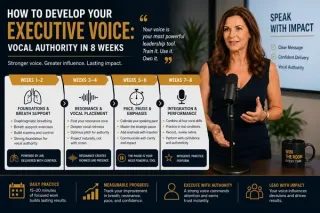
How to Develop Your Executive Voice: Vocal Authority in 8 Weeks
Develop your executive voice with this 8-week vocal authority program. Learn breath support, resonance, pace, pause, and practice routines for senior leaders. ...more
Improve Public Speaking Skills: Expert Tips by Lisa Hugo ,Corporate Communication Tips for CxOs & Executives
July 14, 2026•7 min read