Quick Answer: An effective webinar follows seven stages: an engaging opening, a clear audience problem, a new perspective, a practical teaching framework, supporting evidence, a natural transition to your offer and a specific call to action.
For coaches and consultants, the objective is not simply to share information. It is to help prospective clients understand their challenge, recognise why their current approach may not be working and see how your expertise could help them move forward.
The strongest webinars create value before introducing an offer. They demonstrate how you think, build trust and make the next step feel like a logical continuation of what the audience has learned.
My guiding principle: Teach for understanding, demonstrate your expertise and invite the right people to take the next step.
What You'll Learn
In this guide, you'll discover:
The seven essential stages of a high-converting webinar
How to open a webinar and capture attention
How to teach without overwhelming your audience
How to use storytelling to make your message memorable
How to transition naturally from education to your offer
How to create a compelling webinar call to action
How to adapt your presentation for coaching and consulting services
The common mistakes that reduce engagement and conversions
How to troubleshoot a webinar that isn't generating enquiries
Why Does Webinar Structure Matter?
Webinar structure determines how effectively your audience moves from initial interest to understanding, trust and action.
A webinar can contain excellent information and still fail to generate meaningful results.
I've seen presenters share valuable insights, impressive statistics and sophisticated methodologies, only to lose their audience because the information wasn't organised into a compelling journey.
The problem usually isn't a lack of expertise.
It's a lack of structure.
Your audience needs to understand where you're taking them and why each part of the presentation matters.
Think of your webinar as a guided conversation.
You begin with a problem your audience recognises.
You help them see that problem differently.
You introduce a practical approach to solving it.
You demonstrate why your methodology makes sense.
And you offer a relevant next step for those who want additional support.
A strong webinar doesn't simply transfer information. It changes how people understand their situation.
This is particularly important for coaches and consultants, because prospective clients are evaluating your thinking, communication and judgement as much as your services.
The Seven Stages of a High-Converting Webinar
Here is the framework I recommend for structuring a webinar designed to generate qualified client conversations.
Stage 1: Open With a Compelling Reason to Pay Attention
Your opening should immediately establish relevance, identify the problem and explain what the audience will gain from watching.
The first few minutes are critical.
Your audience has made a decision to invest their time in your presentation.
Now you need to demonstrate that their decision was worthwhile.
Avoid beginning with a lengthy biography, a history of your company or a detailed explanation of everything you're going to cover.
Instead, start with a statement, question or observation that connects directly to the challenge your audience is experiencing.
Example for a business coach:
"You're excellent at what you do. Your clients get results. But attracting new clients still feels unpredictable. What if the problem isn't your expertise, but how you're communicating its value?"
This opening immediately establishes relevance.
It identifies a problem.
And it introduces the possibility of a different explanation.
You can then explain what participants will learn and why it matters.
What to include in your opening:
A clear statement of the problem
A compelling reason the topic matters
The outcome participants can expect from the webinar
A brief explanation of who the presentation is for
A concise introduction establishing your credibility
My recommendation: Aim to establish relevance within the first 60 seconds.
You don't need to tell your entire story immediately.
You need to earn the audience's attention.
Stage 2: Define the Problem Your Audience Wants to Solve
A persuasive webinar demonstrates that you understand the audience's problem before introducing your solution.
This stage is about creating recognition.
Your audience should feel that you understand their circumstances, frustrations and objectives.
For example, a consultant might be targeting business owners who struggle to generate qualified enquiries.
Rather than simply stating that lead generation is difficult, explore the specific symptoms:
Marketing activity is inconsistent
Leads are unpredictable
Referrals provide most new business
Sales conversations begin with basic explanations
Prospective clients struggle to understand the value of the service
These examples make the problem tangible.
But avoid exaggerating the consequences or using fear unnecessarily.
Your objective is to create clarity, not anxiety.
A useful question to ask yourself:
"What does my ideal client experience before they realise they need my help?"
The more accurately you answer that question, the more relevant your presentation becomes.
Stage 3: Introduce a New Perspective
This is where you help the audience reconsider why their current approach may not be producing the results they want.
I consider this one of the most important stages of a webinar.
Information alone rarely changes behaviour.
A new perspective can.
For example, a coach might assume they need to publish more social media content to attract clients.
You could introduce a different perspective:
"The challenge may not be how frequently you're posting. It may be that your audience doesn't have a clear way to experience your expertise before making a buying decision."
Now you've introduced a meaningful distinction.
The audience begins to see why simply increasing activity may not solve the underlying problem.
This creates a natural foundation for your teaching framework.
How to create an effective perspective shift:
Identify a common assumption in your industry.
Explain why that assumption may be incomplete.
Introduce a more useful way to understand the problem.
Support your explanation with reasoning or an example.
Show how this perspective changes the next steps.
Avoid manufacturing controversy.
A useful insight doesn't need to be dramatic.
It needs to help your audience think more clearly.
Stage 4: Teach a Practical Framework
The teaching section should give viewers a clear, memorable method for understanding or addressing the problem.
This is where many experts make their biggest mistake.
They try to teach everything they know.
I understand the temptation.
When you've spent years developing your expertise, you want your audience to recognise its depth.
But overwhelming people with information rarely creates confidence.
It often creates confusion.
Instead, organise your expertise into a simple framework.
For example, a consultant teaching webinar-based client acquisition might introduce three essential components:
1. Message
Communicate a specific problem, relevant insight and compelling outcome.
2. Mechanism
Create a structured journey through which prospective clients can experience your expertise.
3. Momentum
Use follow-up, qualification and sales conversations to help interested prospects take the next step.
Each component should be explained with a practical example.
The goal isn't to deliver an entire training programme in one webinar.
It's to help the audience understand the essential principles and how they fit together.
My recommendation: Use three to five main teaching points whenever possible.
There is no universal ideal number, but a focused framework is generally easier to follow and remember than a long collection of disconnected tips.
Stage 5: Demonstrate Your Approach With Evidence and Examples
Your audience needs to see how your ideas apply in practice. Relevant examples, demonstrations and credible evidence help turn abstract concepts into something understandable.
This is particularly important when selling expertise-based services.
Prospective clients cannot evaluate your methodology simply by reading a list of features.
They need to understand how you think.
You can demonstrate your approach through:
Real client examples, with permission
Your own professional experiences
Before-and-after process explanations
Demonstrations of a specific technique
Illustrative scenarios clearly identified as hypothetical
Relevant research or data from credible sources
For example, a leadership coach might demonstrate how changing the structure of a presentation improves clarity and executive presence.
A marketing consultant might walk through a hypothetical webinar funnel and explain how registration, attendance and booking rates affect the overall outcome.
Important: Never present hypothetical examples as actual client results.
Credibility is far more valuable than an impressive but unsupported claim.
Stage 6: Transition Naturally to Your Offer
The transition to your offer should explain how viewers can move from understanding the problem to implementing the solution with appropriate support.
This is where many webinars become uncomfortable.
The presenter spends most of the session teaching, then abruptly switches into an aggressive sales pitch.
The change in tone feels unnatural.
And the audience becomes defensive.
A better approach is to make the transition a continuation of the educational content.
For example:
"Today I've shown you the essential components of a webinar that attracts the right people, communicates your expertise and creates qualified client conversations. Understanding the framework is the first step. Implementing it consistently requires the right message, presentation, technology and follow-up process."
You can then explain how your programme or service helps people implement what they've learned.
The transition should answer three questions:
Why might someone need additional support?
Explain the practical challenges involved in implementation.
What support do you provide?
Describe your methodology, service or programme clearly.
Who is the offer suitable for?
Help viewers determine whether the next step is relevant to their circumstances.
My recommendation: Don't hide the fact that you have an offer.
Be transparent about the next step and focus on helping the right people make an informed decision.
Stage 7: Deliver a Clear Call to Action
An effective webinar call to action tells viewers exactly what to do next, why it matters and what they can expect afterwards.
For coaches and consultants selling higher-value services, the objective is often to generate a qualified conversation rather than an immediate purchase.
Possible calls to action include:
Book a strategy consultation
Complete a coaching application
Request a business assessment
Schedule an introductory conversation
Apply for a specific programme
Choose one primary action.
Avoid presenting multiple competing options at the end of your webinar.
Example CTA for a business consultant:
"If you'd like to explore how this framework could apply to your business, the next step is to complete a short application. We'll review your situation and, if there's a potential fit, arrange a conversation to discuss your goals and what implementation could involve."
This CTA is clear, relevant and transparent.
It doesn't promise outcomes that haven't been established.
And it helps prospective clients understand what happens next.
How Long Should Each Part of Your Webinar Be?
For a 45-minute educational webinar, a useful starting structure is approximately five minutes for the opening, five minutes for the problem, five minutes for the perspective shift, fifteen minutes for teaching, five minutes for examples and ten minutes for the offer and next steps.
This is a planning example, not a universal conversion benchmark.
A possible structure is:
Minutes 0–5: Opening, relevance and credibility
Minutes 5–10: Audience problem
Minutes 10–15: New perspective
Minutes 15–30: Teaching framework
Minutes 30–35: Examples and evidence
Minutes 35–42: Transition and offer
Minutes 42–45: Call to action and next steps
The seven stages do not have to be seven rigid sections.
You may introduce examples throughout the teaching, explain the next step earlier or reserve additional time for live questions.
The right duration depends on the audience, topic, complexity of the offer and viewing format.
The objective is not to fill 45 minutes. It is to create sufficient understanding and trust for the audience to make an informed decision.
How Do You Keep Webinar Viewers Engaged?
Webinar engagement improves when the presentation is relevant, easy to follow, visually clear and built around meaningful changes in perspective.
You don't need constant entertainment.
You need to maintain attention.
Here are five techniques I recommend.
1. Ask Questions That Encourage Reflection
Instead of continuously presenting information, invite viewers to consider their own circumstances.
For example:
"How many of your prospective clients understand what makes your approach different before they speak to you?"
A thoughtful question can encourage active participation, even when viewers cannot respond directly.
2. Use Stories to Make Ideas Memorable
People often remember a practical example more easily than an abstract explanation.
A short story can demonstrate the problem, decision and result associated with a particular approach.
Keep stories relevant.
They should reinforce the teaching rather than interrupt it.
3. Keep Your Slides Focused
Avoid filling slides with paragraphs of text.
Use one central idea per slide where practical.
Charts, diagrams and examples can be valuable when they make complex ideas easier to understand.
Your slides should support your communication, not replace it.
4. Vary Your Delivery
Your voice, pace, pauses and emphasis influence how people experience your presentation.
A monotonous delivery can make even useful information difficult to follow.
Use pauses to allow important ideas to register.
Slow down when explaining something complex.
And vary your pace naturally to maintain attention.
5. Create Clear Transitions
Tell your audience when you're moving from one idea to another.
For example:
"Now that we've identified why the traditional approach often fails, let's look at the three elements that need to work together."
Transitions help viewers understand the logic of the presentation.
How Should Webinar Structure Differ for Coaches and Consultants?
Coaches should generally emphasise the transformation they help clients achieve, while consultants may need to devote more attention to their diagnostic thinking, methodology and commercial implications.
Both approaches should remain educational and credible.
Webinar Structure for Coaches
A coach's webinar might focus on:
A recognisable personal or professional challenge
The beliefs or behaviours contributing to the problem
A new way of understanding the challenge
A practical coaching framework
Examples demonstrating the approach
An invitation to explore a coaching programme
For example, an executive communication coach might teach three changes that help leaders communicate with greater clarity and authority.
The next step could be an application for a private coaching programme.
Explore our guide to Webinar Funnels for Coaches.
Webinar Structure for Consultants
A consultant's webinar might focus on:
A costly or persistent business challenge
Why common approaches are ineffective
A diagnostic framework
The operational or commercial implications
A practical implementation methodology
An invitation to discuss the organisation's specific circumstances
For example, an operations consultant might explain why a business continues experiencing delivery delays despite investing in new software.
The webinar could demonstrate how process design, accountability and measurement interact.
The next step might be a diagnostic consultation.
Explore our guide to Webinar Funnels for Consultants.
Should You Use the Same Structure for Live and Evergreen Webinars?
Yes. The underlying presentation structure can remain largely the same, but live and evergreen webinars require different approaches to interaction, timing and audience expectations.
In a live webinar, you can ask questions, respond to comments and adapt explanations based on audience reactions.
In an evergreen webinar, you need to anticipate common questions and make the presentation self-contained.
Avoid references to specific dates or events that will quickly become outdated.
And be transparent about recorded delivery.
If you're deciding which format is right for your business, read Live vs Evergreen Webinars: Which Is Better for Coaches and Consultants?.
Seven Common Webinar Presentation Mistakes
Mistake 1: Starting With a Long Introduction
The problem: You spend too much time describing your background before establishing relevance.
The solution: Open with the audience's problem and explain why the presentation matters. Introduce your credentials briefly once you've earned attention.
Mistake 2: Teaching Too Much
The problem: You overwhelm viewers with information.
The solution: Focus on a small number of meaningful insights and organise them into a clear framework.
Mistake 3: Making the Presentation About Yourself
The problem: You focus on your achievements rather than the audience's needs.
The solution: Use your experience to support the teaching, not dominate it.
Mistake 4: Using Too Many Slides
The problem: The presentation becomes visually overwhelming.
The solution: Remove unnecessary slides and make each visual support a specific idea.
Mistake 5: Introducing the Offer Abruptly
The problem: The educational presentation suddenly becomes an unrelated sales pitch.
The solution: Explain how the offer supports implementation of what the audience has learned.
Mistake 6: Giving an Unclear Call to Action
The problem: Viewers don't understand what to do next.
The solution: Present one primary action and explain exactly what happens afterwards.
Mistake 7: Ending Without a Follow-Up Plan
The problem: You assume interested viewers will take action immediately.
The solution: Build a relevant follow-up sequence that reinforces the teaching, answers common questions and provides another opportunity to take the next step.
Troubleshooting: Why Isn't Your Webinar Converting?
Before rebuilding your webinar, identify where viewers lose interest or stop taking action. Different symptoms require different solutions.
Problem 1: Viewers Leave During the Opening
Possible cause: The introduction is too long or doesn't establish relevance.
What to do: Strengthen the opening statement, clarify the promise and reduce unnecessary background information.
Problem 2: Viewers Stop Watching During the Teaching
Possible cause: The content is too complex, repetitive or disconnected from their needs.
What to do: Simplify the framework, add practical examples and improve transitions.
Problem 3: Viewers Watch but Don't Take Action
Possible cause: The offer doesn't feel relevant or the next step is unclear.
What to do: Review the connection between the problem, teaching framework, offer and CTA.
Problem 4: Viewers Book Calls but Aren't Qualified
Possible cause: The webinar is attracting the wrong audience or the offer isn't sufficiently specific.
What to do: Clarify who the webinar is for, explain who the programme suits and improve the application process.
Problem 5: The Webinar Generates Interest but Few Clients
Possible cause: The problem may extend beyond the presentation into qualification, pricing, offer positioning or the sales process.
What to do: Review the complete client acquisition journey rather than assuming the webinar alone is responsible.
For a broader explanation of how the presentation connects to registration, automation and sales, explore our Complete Guide to Webinar Funnels.
How Do You Know Whether Your Webinar Structure Is Working?
A well-structured webinar should hold the attention of relevant viewers, communicate your methodology clearly and generate appropriate next-step actions.
I recommend measuring:
Webinar viewing and completion rates
Audience retention at key sections
Engagement with the call to action
Applications or consultations booked
Quality of enquiries
Sales call attendance
Client conversion rates
Look at where people stop watching.
If viewers consistently leave before the teaching begins, the opening may need improvement.
If viewers watch most of the presentation but rarely click the CTA, the transition or offer may need attention.
If people book consultations but aren't suitable clients, revisit your positioning and qualification process.
No single metric tells the whole story.
The objective is to understand how the presentation contributes to the complete client acquisition process.
Final Thoughts: Structure Creates Clarity, and Clarity Builds Trust
The best webinar structure helps your audience understand their problem, discover a useful approach and make an informed decision about what to do next.
You don't need to overwhelm people with information.
You don't need an aggressive sales pitch.
And you don't need complicated presentation tricks.
You need a clear message, a relevant teaching framework, credible examples and a logical next step.
For coaches and consultants, that is particularly powerful because your expertise is central to what you're selling.
Your webinar should give prospective clients the opportunity to experience the quality of your thinking before they decide whether to work with you.
That's what turns a presentation into a meaningful part of your client acquisition strategy.
Ready to Turn Your Expertise Into a Webinar That Generates Clients?
If you want guidance developing your message, structuring your webinar and building a client acquisition system around your expertise, explore the Influential Voice Accelerator.
If you have an established offer and would prefer professional implementation of your webinar funnel, CRM, automation and follow-up, learn more about our Done-For-You Webinar Funnels.
About the Author
Lisa Hugo is a communication and webinar strategy specialist with more than two decades of experience helping executives, entrepreneurs and experts communicate with clarity and impact.
As co-founder of Audacia Marketing Management LLC, Lisa combines communication expertise with practical webinar marketing and client acquisition strategies for coaches, consultants and expertise-based businesses.
Frequently Asked Questions
What is the ideal webinar structure?
An effective webinar typically includes an engaging opening, a clearly defined problem, a new perspective, a practical teaching framework, supporting examples, an offer transition and a clear call to action. The exact structure should be adapted to the audience and offer.
How long should a webinar be to generate clients?
There is no universally ideal length. A focused 30 to 60-minute educational webinar can be a useful starting point, but the right duration depends on the topic, audience and complexity of the offer.
How much of a webinar should be educational?
The majority of the presentation should create genuine understanding and value. Rather than following a rigid percentage, focus on teaching enough for viewers to understand your approach before introducing a relevant next step.
Should I include my personal story in a webinar?
Yes, when it supports the message. A relevant personal experience can establish credibility and make an idea memorable. Keep the story focused on what the audience can learn from it.
How do I transition from teaching to selling?
Connect your offer to the framework you've just taught. Explain what implementation involves, where additional support may be useful and how your programme or service helps suitable prospects move forward.
What is the best webinar call to action for high-ticket coaching?
For many higher-value coaching programmes, an application or consultation is more appropriate than asking viewers to purchase immediately. The CTA should explain who the programme is for and what happens next.
Can I use the same webinar structure for an evergreen webinar?
Yes. The core presentation structure can remain the same. However, evergreen webinars should be self-contained, avoid outdated references and anticipate questions that would otherwise be answered live.
Do I need a webinar script?
A script can help you organise your message, but reading every word may make your delivery sound unnatural. I generally recommend a clear presentation outline, well-developed transitions and enough rehearsal to communicate confidently.
How many slides should a webinar have?
There is no ideal number. Use enough slides to support the teaching without overwhelming viewers. Prioritise clarity, relevant visuals and one central idea per slide where practical.
Looking for Lisa's executive communication coaching, public speaking training or corporate programmes?


Helping coaches, consultants and experts turn their expertise into clients through webinars, strategic communication and smart marketing systems.
WEBINAR MARKETING
PROGRAMS
LISA HUGO
Copyright © 2026 Audacia Marketing Management LLC, All rights reserved.
Privacy Policy : Terms of Use : Cookie Policy : Refund Policy



She’s helped 1000s of clients around the world to develop their speaking skill with her 1 : 1 coaching and powerful programs, each centered on a different aspect of speaking, including confidence, voice, presentation, and body language.
COMPANY
LEGAL
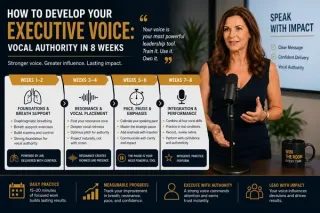
How to Develop Your Executive Voice: Vocal Authority in 8 Weeks
Develop your executive voice with this 8-week vocal authority program. Learn breath support, resonance, pace, pause, and practice routines for senior leaders. ...more
Improve Public Speaking Skills: Expert Tips by Lisa Hugo ,Corporate Communication Tips for CxOs & Executives
July 14, 2026•7 min read